News
Precision at Every Scale: What a Boarding House BBQ Area Reveals About Manufacturing Excellence
When our sons' boarding house approached us to design and build a new BBQ area, the project brief was straightforward: create a functional outdoor space where students could gather, cook, and build community.
What emerged was something far more significant than a simple BBQ shelter—it was a demonstration of the manufacturing precision, vertical integration, and quality standards that define every Chalmers Constructions project.
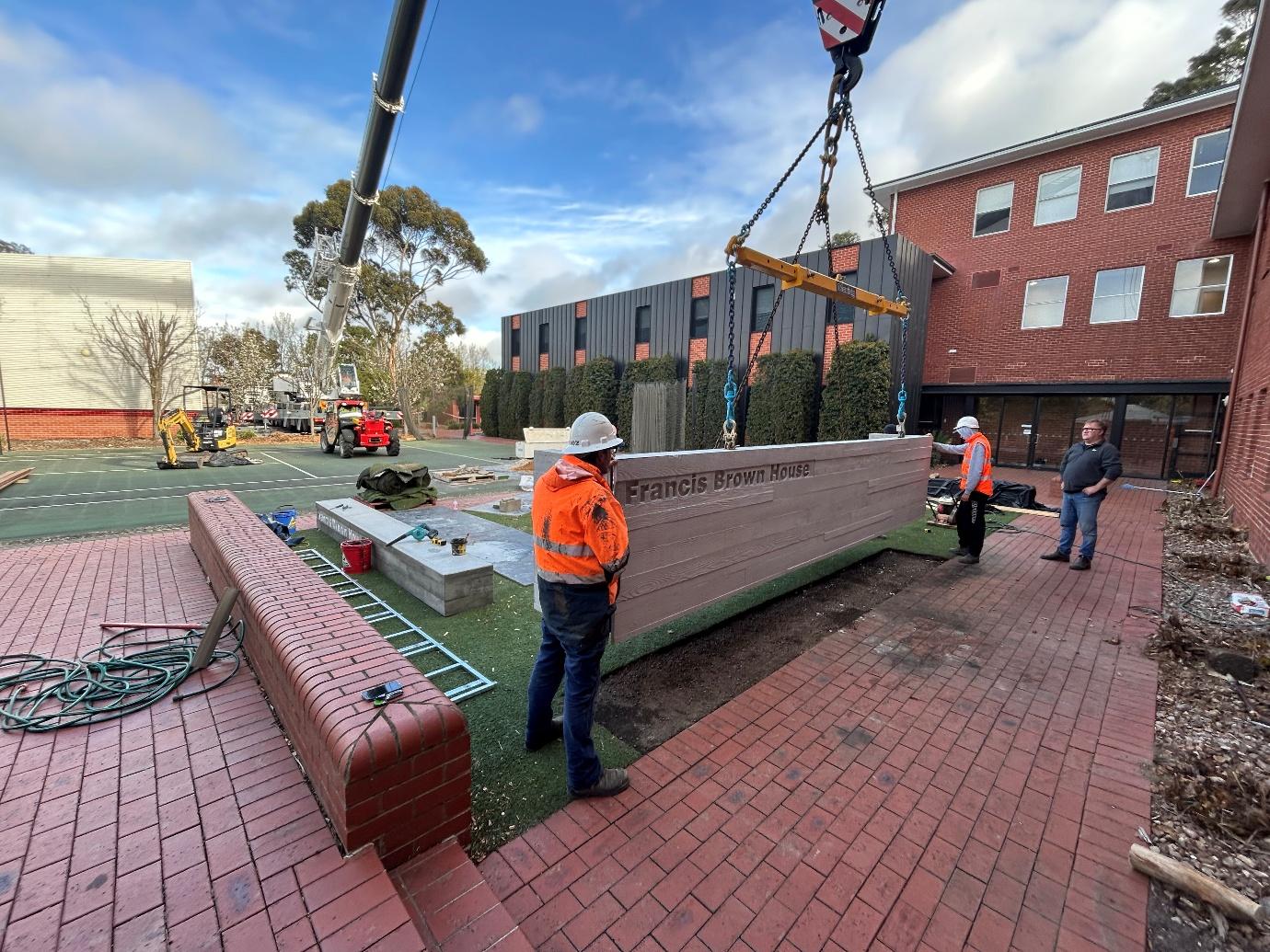
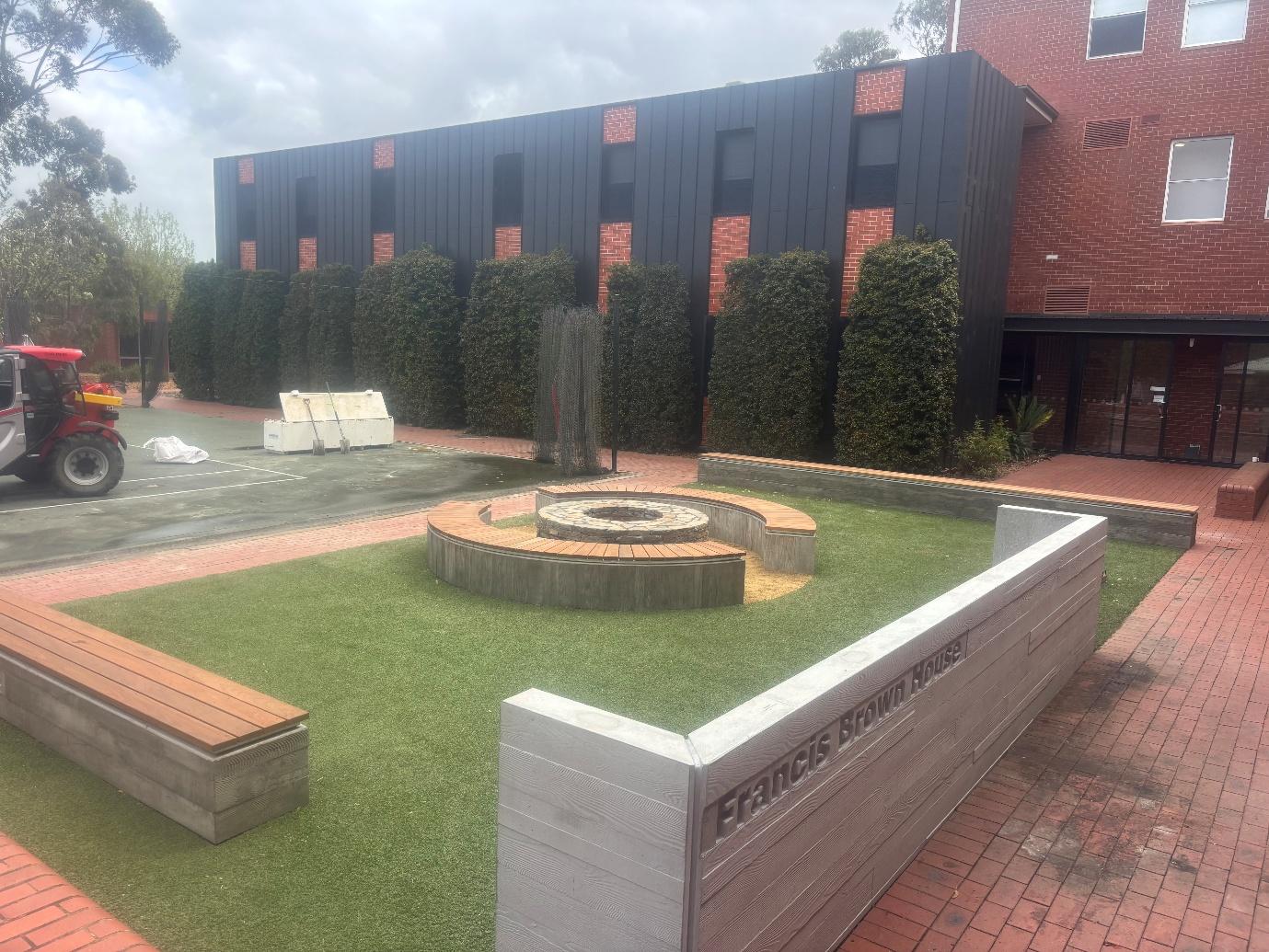
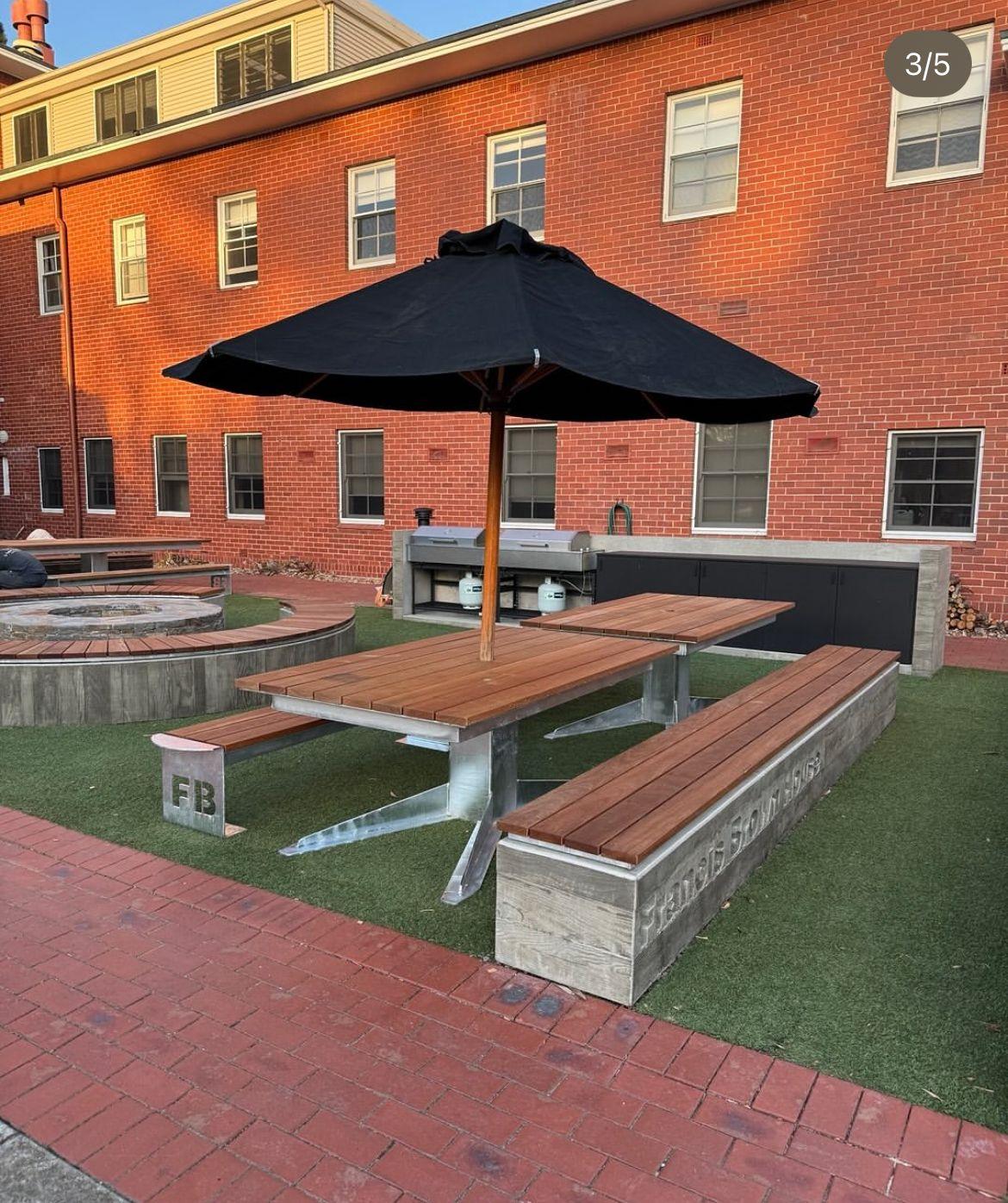
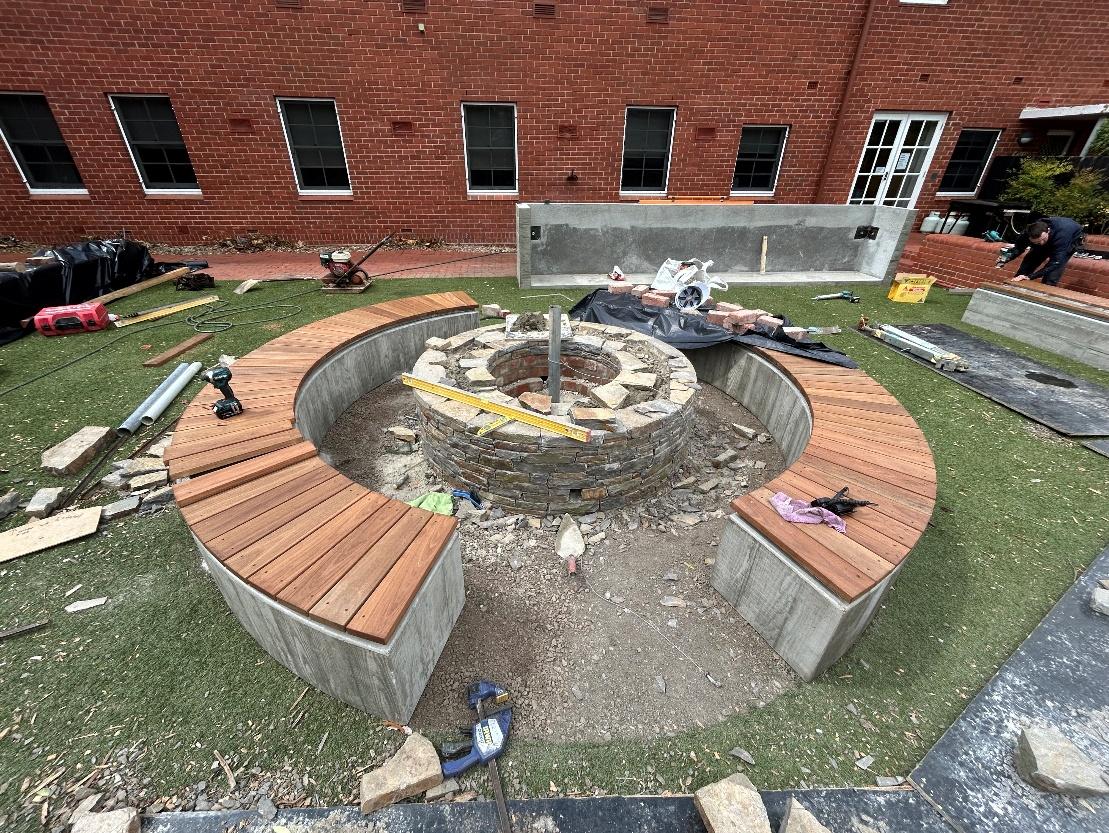
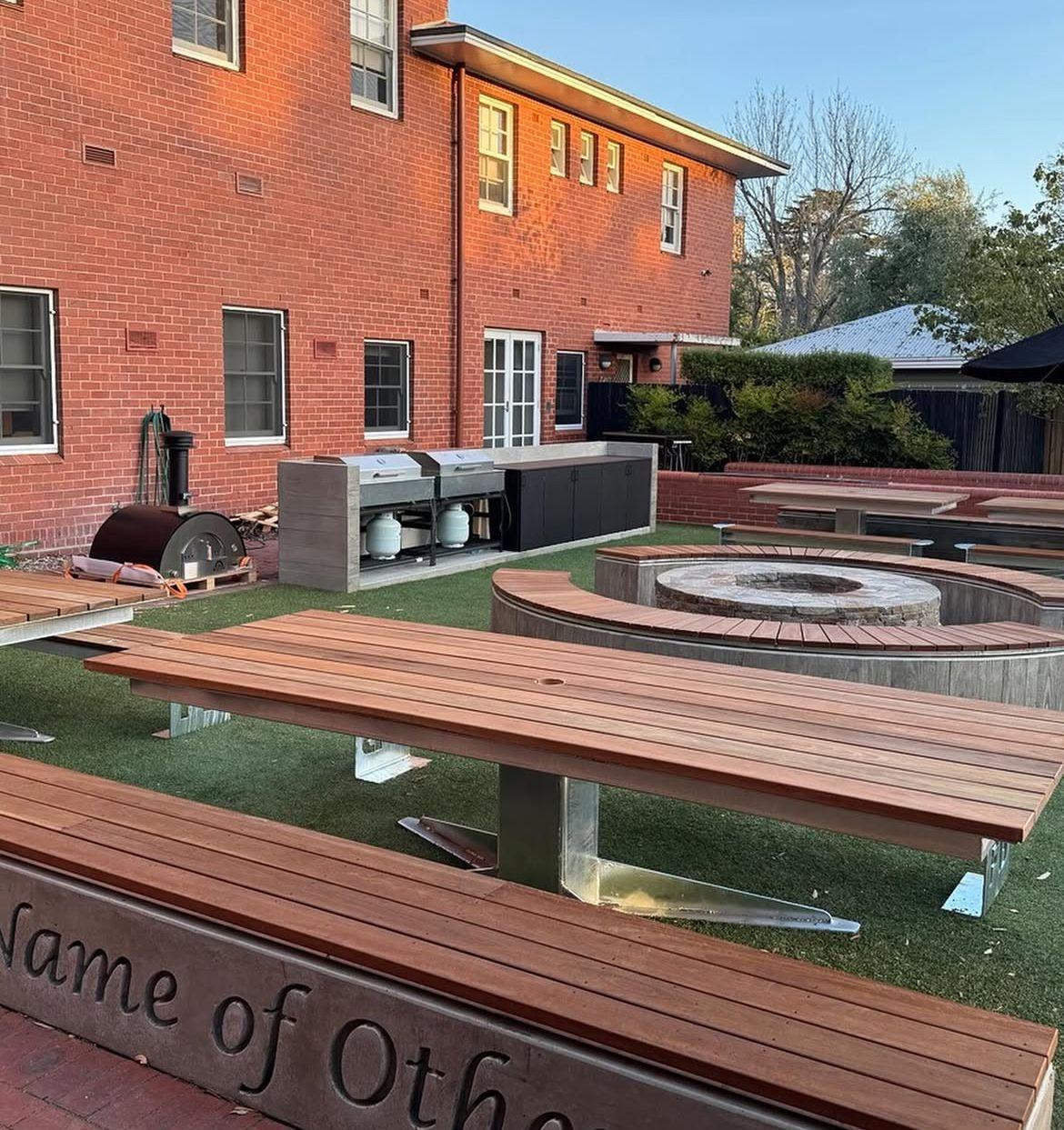
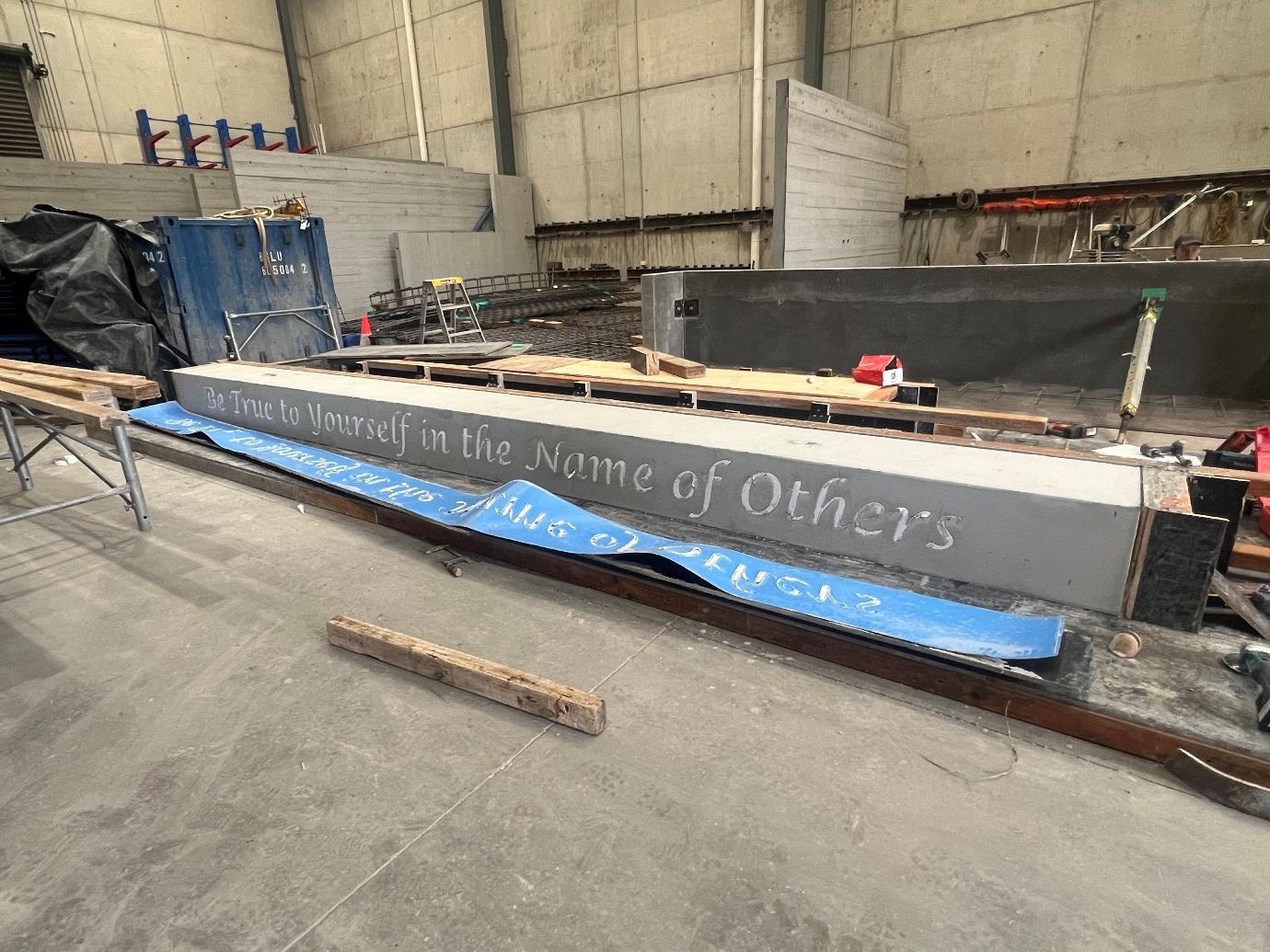
The completed space features a custom-designed BBQ bench, curved concrete seating surrounding a stone firepit, integrated tables and bench seating, and a distinctive detail: the boarding house name and motto embedded directly into the concrete using polystyrene lettering.
While modest in scale compared to our warehouse and commercial projects, the BBQ area required the same exacting standards of custom formwork design, material coordination, and installation precision that we bring to architectural facades and structural precast panels.
Technical Capability
The technical challenges of embedding lettering flawlessly into curved concrete seating are fundamentally identical to the challenges of producing blemish-free architectural panels for commercial facades. The BBQ project wasn't a departure from our core expertise; it was our core expertise applied at an intimate scale, with every detail visible and every surface exposed to daily scrutiny.
The Technical Challenge: Custom Architectural Concrete at Furniture Scale
Creating curved concrete seating with embedded details presents the same manufacturing challenges that architects specify for high-end commercial projects—just compressed into a smaller footprint where every imperfection would be immediately visible and tactile.
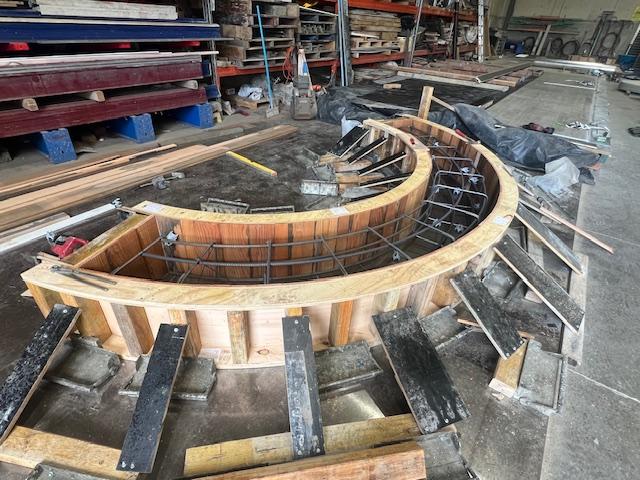
The curved bench seating required custom formwork design to achieve smooth, continuous curves without flat spots or irregular transitions. Unlike standard straight-panel formwork, curved forms demand precise geometric calculations and specialized construction to maintain structural integrity under the pressure of concrete placement. The radius had to be consistent across the entire length, creating comfortable seating while maintaining the aesthetic flow of the design.
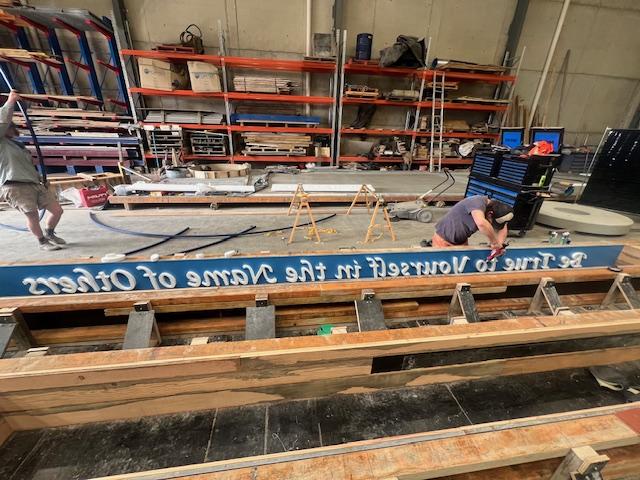
The embedded lettering introduced a second layer of complexity. We used polystyrene lettering placed precisely within the formwork before the concrete pour—a technique that requires meticulous attention to depth, alignment, and securement. The letters had to be positioned so they would be revealed at exactly the right depth after finishing, creating crisp, legible text that's integral to the concrete rather than applied afterward. Any movement during the pour, any inconsistency in concrete placement around the complex shapes, or any error in form release would have compromised the detail permanently.
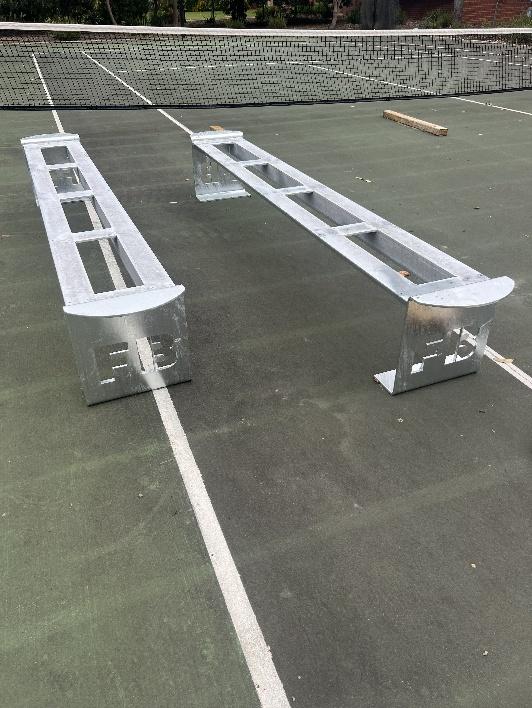
The integration of multiple materials added further coordination requirements. The concrete seating surrounds a stone firepit, requiring precise dimensional control to ensure proper fit and structural connection. The BBQ bench incorporates both concrete work surfaces and structural steel framing. The tables and bench seating combine steel fabrication with concrete tops. Each material interface had to be engineered for both structural performance and visual coherence.
These challenges mirror exactly what we encounter in architectural precast for commercial buildings: custom formwork for complex geometries, embedded reveals and details that must be executed flawlessly in the pour, integration of multiple materials and structural systems, and finish quality that will be scrutinized at close range for decades. The difference is scale, not capability. The precision manufacturing requirements are identical.
Manufacturing in Our Torquay Facility: Quality Control from Design Through Production
Every element of the BBQ project was manufactured in the same 3,000m² Torquay facility where we produce architectural panels and structural precast components for commercial construction. The quality control environment, manufacturing processes, and technical standards remained unchanged regardless of project size.
Our approach began with in-house design and engineering. We developed the curved bench geometry, calculated formwork requirements, engineered the steel table frames, and planned the modular assembly sequence. This eliminated the coordination delays and communication gaps that occur when design is separated from manufacturing. When our team identified opportunities to improve constructability or enhance durability, we could implement changes immediately without external approvals or contractor negotiations.
The custom formwork for the curved benches was fabricated in our facility using the same precision that we apply to formwork for architectural panels. We constructed the curved forms to maintain consistent radius and provide the smooth surface finish required for exposed outdoor concrete. The polystyrene lettering was positioned and secured within the forms using techniques we've refined through years of producing panels with embedded reveals, recesses, and architectural details.
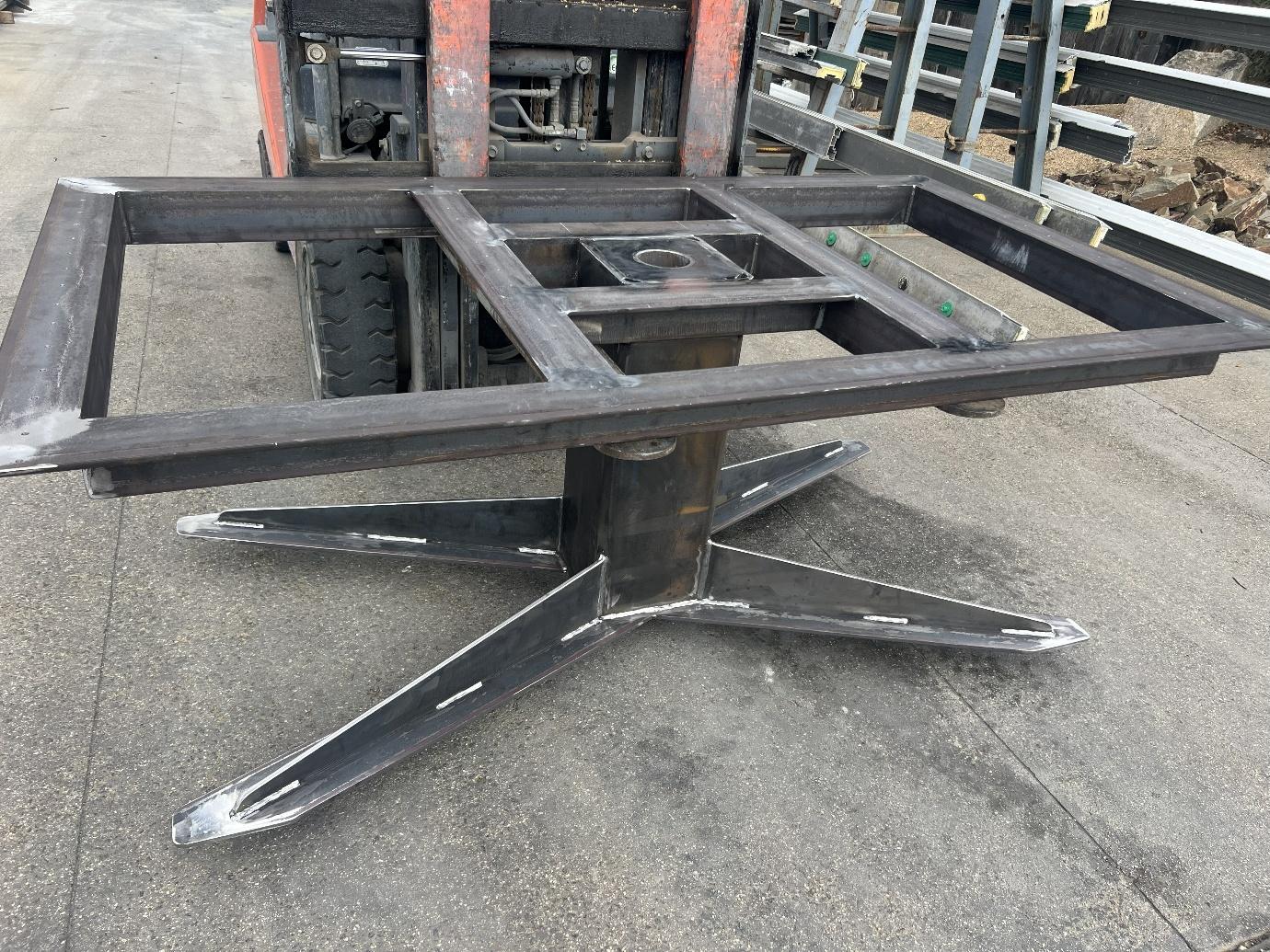
Our boilermaker—whose expertise is normally applied to structural steel for warehouse construction—fabricated the table frames and bench supports. The welding quality, finish consistency, and structural design brought industrial-grade durability to furniture-scale components. We didn’t compromise or simplify our approach; we applied our commercial-grade craftsmanship to every connection and every member, ensuring the steel elements would perform flawlessly for decades of daily use.
The concrete work employed our standard quality control protocols. We used consistent mix designs, maintained proper curing conditions, and applied the same surface finishing techniques that produce the blemish-free results we're known for in architectural work. The outdoor exposure and tactile nature of seating surfaces actually imposed stricter requirements than many commercial facades—any surface imperfection would be immediately noticeable and physically felt by users.
The key insight is this: the same controlled manufacturing environment that eliminates weather variables, temperature fluctuations, and workmanship inconsistencies for commercial projects delivered identical advantages for the BBQ components. We didn't create a special process for this project. We applied our standard process, demonstrating that our quality control systems work at any scale.
Vertical Integration Advantage: Complete Control from Concept to Installation
The BBQ project is a great example of our ability to employ our strategic focus on vertical integration—the ability to design, manufacture, fabricate, and install using our own team and equipment without reliance on external contractors or coordination with multiple subcontractors.
We designed the project in-house, developing the layout, detailing the curved concrete forms, engineering the steel structures, and planning the installation sequence. This eliminated the inefficiencies and quality risks of separating design from execution. When our manufacturing team identified an opportunity to improve a detail or enhance durability, we implemented the change immediately. When our crane operator reviewed the lifting plan, we adjusted module sizes to optimize single-lift efficiency. This integrated design-build approach compressed timelines and eliminated coordination errors.
We manufactured all concrete components in our facility, maintaining direct quality control over every pour, every finish, and every curing cycle. We fabricated all steel components in our workshop, applying structural welding standards to furniture-scale assemblies. This meant no delays waiting for external suppliers, no quality disputes with subcontractors, and no coordination gaps between trades.
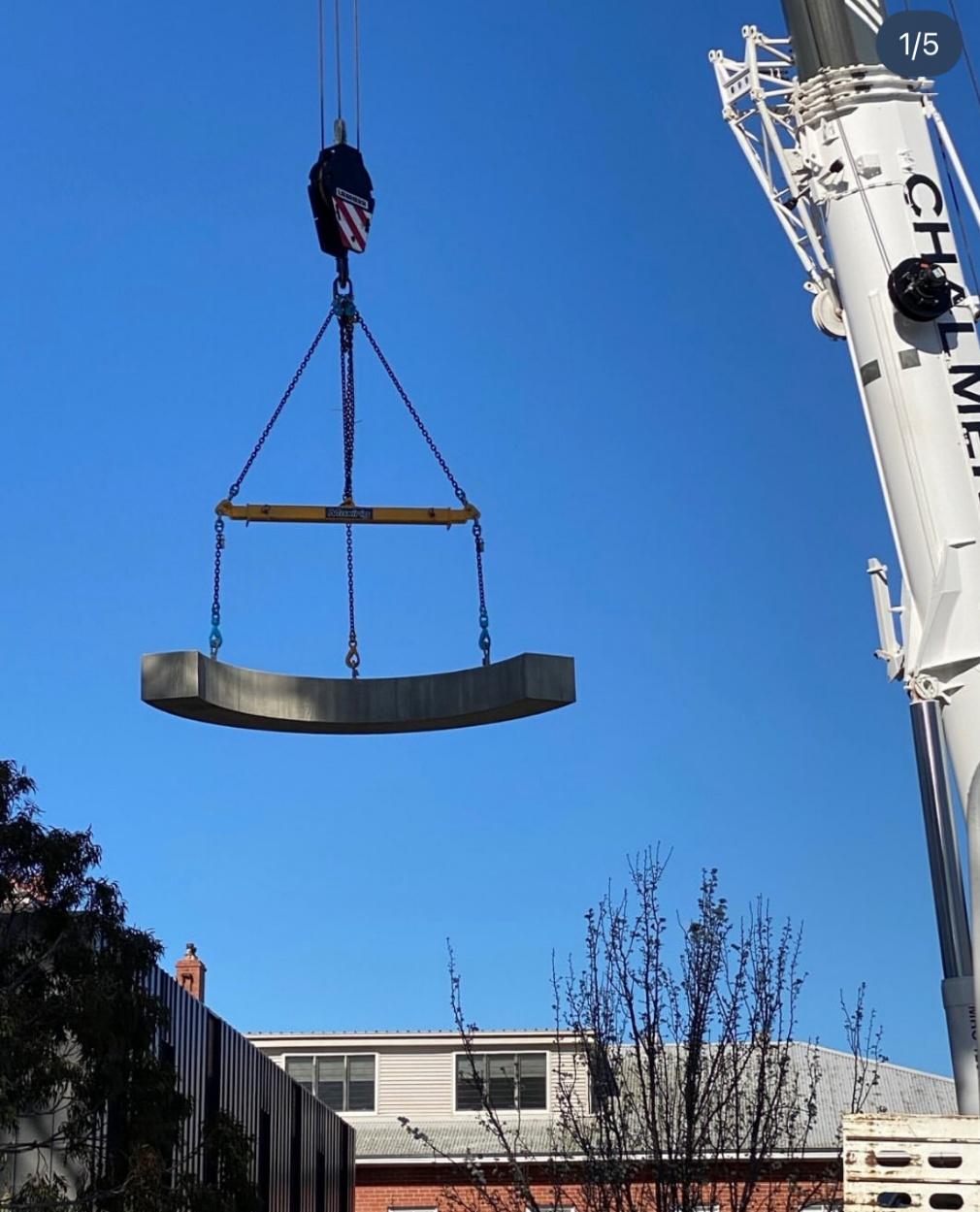
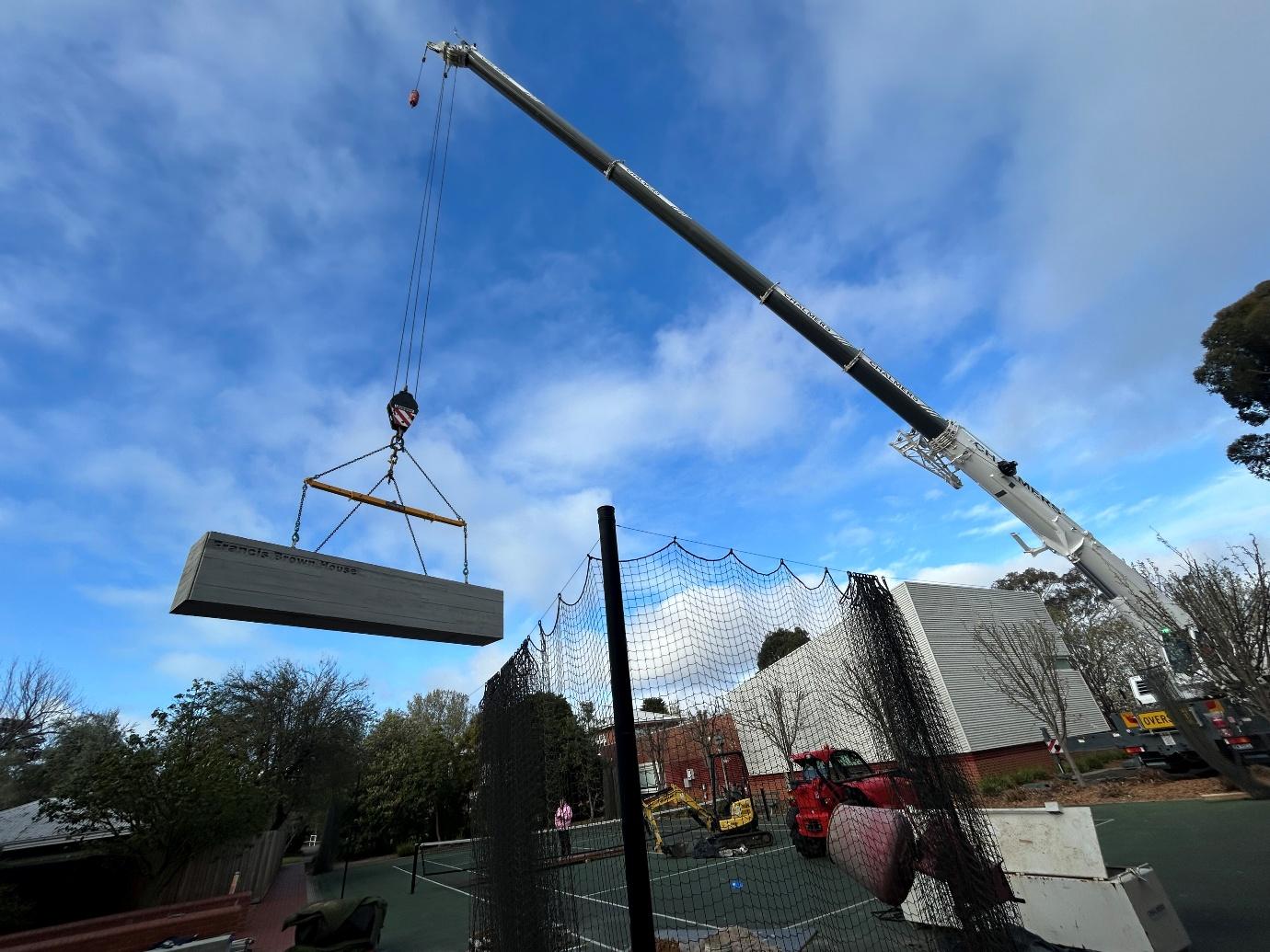
We installed the completed modules using our own 120T Liebherr crane, prefabricating the components for efficient placement in a single mobilization. The crane work demonstrated the same lifting precision and site coordination we bring to commercial panel installation—just applied to benches and tables instead of facade elements. The prefabrication approach meant minimal site disruption, compressed installation timeline, and immediate usability upon completion.
Throughout the entire project, there was a single point of accountability: Chalmers Constructions. We didn't coordinate with an external designer, wait for a supplier's production schedule, negotiate with a steel fabricator, or arrange a crane hire company's availability. We controlled every variable that typically introduces delay, cost uncertainty, or quality compromise into construction projects.
This is precisely what vertical integration delivers for commercial clients. Whether we're manufacturing 17-meter architectural panels for a waterfront development or curved concrete benches for a boarding house, the process advantages remain constant: compressed timelines through parallel workflows, quality control through direct manufacturing oversight, cost certainty through elimination of contractor markups and coordination inefficiencies, scheduling reliability through control of critical path activities, and single-source accountability eliminating disputes over responsibility.
The BBQ project proves that our vertical integration model isn't a theoretical marketing gimmick—it's a proven operational reality that functions identically at every scale.
From Concept to Installation: Prefabrication Efficiency in Practice
The project timeline demonstrates how prefabrication methodology accelerates delivery while maintaining quality standards.
During the design and engineering phase, we developed the complete project scope in our facility: curved bench geometry and formwork requirements, embedded lettering placement and securement details, steel table and bench frame design, stone firepit integration and structural connections, and modular assembly sequence for crane installation. This comprehensive front-end planning is identical to our approach for commercial projects—we invest engineering time upfront to eliminate problems during manufacturing and installation.
Manufacturing occurred in parallel modules within our facility. While concrete benches were being cast and cured, steel frames were being fabricated and finished. While lettering details were being refined in one area, structural connections were being welded in another. This parallel workflow is impossible with sequential on-site construction, where each trade must complete their work before the next can begin.
The installation occurred in a single crane mobilization, with prefabricated modules positioned efficiently and connected on-site. The students' involvement in painting provided a valuable community engagement opportunity while our team focused on the technical work requiring specialized equipment and expertise. The compressed site activity meant minimal disruption to the boarding house operations—the space transformed from concept to completed facility in a timeframe that would be impossible with traditional on-site construction methods.
This prefabrication approach delivers identical advantages for commercial clients. Site work is compressed to positioning and connection rather than full fabrication and construction. Weather impacts are minimized because manufacturing occurs in controlled environments. Quality is consistent because production occurs using proven processes and equipment. Project certainty increases because the bulk of work happens in our facility where we control all variables.
What This Demonstrates for Commercial Projects
The BBQ area provides tangible proof of capabilities that translate directly to commercial architectural and structural precast applications.
For architects and designers, this project demonstrates our capacity for complex architectural details in exposed concrete. The embedded lettering proves we can execute intricate reveals, recesses, and surface articulation with precision. The curved forms show we're not limited to rectangular geometry—we can manufacture the custom shapes that architectural vision requires. The finish quality on outdoor concrete surfaces, subjected to daily tactile interaction and close visual inspection, confirms our manufacturing standards exceed what's required for most commercial facades. When an architect specifies complex precast details, this project provides confidence that we have both the technical capability and the quality commitment to execute their design intent flawlessly.
For developers and commercial builders, this project demonstrates the operational advantages of our vertical integration model. The single-source accountability eliminated coordination complexity and schedule uncertainty. The prefabrication approach compressed the project timeline and minimized site disruption. The quality outcome demonstrates that our manufacturing standards don't vary with project scope—we bring the same attention to detail and execution rigor whether we're building for a boarding house or a commercial client. When a developer evaluates construction risk and timeline certainty, this project proves our integrated model functions exactly as we represent it: one team, one facility, one accountability structure delivering predictable outcomes.
For structural engineers and specifiers, this project demonstrates our engineering capability and manufacturing precision. The custom formwork design for curved geometries, the structural steel integration across multiple elements, the dimensional control required for modular assembly, and the quality control protocols ensuring consistent results all mirror the technical requirements of commercial structural precast. When an engineer specifies performance criteria or dimensional tolerances, this project confirms we have the manufacturing sophistication and technical rigor to meet exacting standards.
The strategic insight is that our capability doesn't scale down for smaller projects—our standards remain constant. The corollary is that clients can trust those same standards will be maintained on large, complex commercial projects. The BBQ area is permanent proof of manufacturing excellence, visited daily by dozens of students who would immediately notice any quality shortcoming. That level of scrutiny and longevity is exactly what commercial projects demand.
Building for Community, Built with Commercial Excellence
Once completed, the BBQ area remains consistently used and highly valued by boarding house students. The concrete surfaces show no deterioration despite constant exposure to weather and daily use. The embedded lettering remains crisp and legible. The steel structures maintain their finish and structural integrity. The space functions exactly as designed because it was built to commercial standards from the outset.
We didn't simplify our approach for a smaller project. We didn't compromise on manufacturing precision, quality control, or installation expertise. We applied the same vertically integrated process that architects specify for architectural facades: in-house design ensuring buildability, controlled factory manufacturing eliminating site variables, precision fabrication by skilled tradespeople, and efficient crane installation minimizing site disruption.
The FB BBQ project proves a fundamental principle that defines Chalmers Constructions: our commitment to flawless finishes and complete vertical integration doesn't change with project size. Whether we're manufacturing panels for a major commercial development or curved benches for a boarding house, the quality standard remains absolute. The manufacturing precision is identical. The process control is unchanged. The attention to detail is constant.
That consistency is our competitive advantage. When architects specify complex precast details, they need confidence that the finished product will match their design intent. When developers evaluate construction timelines and risk, they need certainty that commitments will be met. When engineers set performance criteria, they need assurance that manufacturing capabilities exist to achieve specified tolerances.
The BBQ area provides that confidence, that certainty, and that assurance—not through marketing claims, but through visible, tangible, daily-use proof of manufacturing excellence. It's a permanent demonstration that the same facility producing architectural panels for Geelong's major developments can execute complex custom work at any scale without compromising the quality standards that define our reputation.
This is what building with Chalmers Constructions means: whether the project is measured in square meters or square kilometres, the commitment to precision manufacturing and complete project control remains unchanged. The BBQ area isn't a sidebar to our commercial work—it's a demonstration of exactly why architects, developers, and engineers choose us for projects where quality, integration, and execution certainty matter most.
Let’s Talk About Your Project
Talk to the team that can do it all.
Call Norm Chalmers 0419 595 580